
Why Cybersecurity Needs a Digital Twin
For decades, cybersecurity has largely been a reactive discipline. Systems were designed, developed, deployed, and only then subjected to extensive security testing. While this approach has worked reasonably well in traditional IT environments, it becomes increasingly problematic in modern Internet of Things (IoT) ecosystems. These systems are characterized by complex interdependencies, distributed architectures, heterogeneous devices, and constantly evolving software components. By the time vulnerabilities are discovered in production, remediation is often costly, disruptive, and in some cases impossible without operational downtime.
As organizations embrace connected technologies across critical infrastructure, manufacturing, energy, transportation, and smart city environments, the need for earlier and more comprehensive security validation has become clear. Security can no longer be treated as a final verification step. Instead, it must become an integral part of the design process.
This is the vision behind the Digital Cybersecurity Twin (DCT), developed within the DOSS project. The Digital Cybersecurity Twin introduces a new approach to security validation by creating a virtual representation of an IoT system and enabling automated vulnerability analysis, attack simulation, penetration testing, and security assessment before deployment. Rather than waiting for attackers to discover weaknesses in production environments, organizations can identify and address vulnerabilities in a controlled virtual environment while systems are still under development.
Moving Beyond Traditional Security Testing
Traditional security testing often relies on a combination of manual reviews, vulnerability scans, penetration tests, and compliance assessments. While these methods remain important, they face significant limitations when applied to complex IoT ecosystems.
Modern systems consist of numerous interconnected devices, software services, communication protocols, cloud components, and third-party dependencies. Understanding how vulnerabilities propagate through these environments is difficult, particularly when multiple components interact in unexpected ways. A vulnerability that appears low risk at the component level may have significant consequences when considered in the context of the broader architecture.
The DCT addresses this challenge by taking a system-centric view of security. Rather than focusing solely on individual vulnerabilities, it analyzes how components interact, how attacks can propagate through the architecture, and what impact successful attacks may have on operational objectives.
This shift from isolated testing to holistic system analysis represents one of the most important advances in modern cybersecurity engineering.
How DCT Works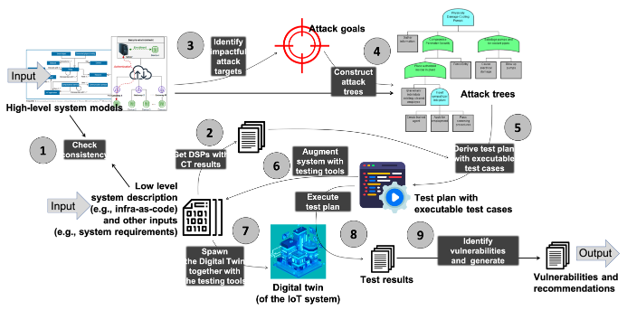
Figure 1 – Overall approach for automated, digital twin-based security testing of IoT systems
DCT expects to receive all proprietary software components of the system (needed for instantiating the digital twin of the system in the virtualized environment), some high-level system models (e.g., static system configuration, data flows, error propagation rules, etc.), and all relevant assumptions and system requirements from the system developer/integrator. Once these inputs are received, our framework performs the following steps fully automatically (see also Figure 1 for illustration):
- checks the consistency of the inputs received from the system developer/integrator;
- identifies system components and retrieves their DSPs that include the results of tests that have been performed at the component level;
- performs error propagation analysis on the system and determines impactful attack goals that, if reached, violate important system requirements;
- generates attack trees for those attack goals;
- generates executable test cases and a test plan from the attack trees;
- augments the IaC representation of the digital twin by appropriate testing and observational tools;
- launches the digital twin, together with the testing and observational tools, in a virtualized execution environment;
- executes vulnerability scanning and penetration testing of the system according to the test plan and using the testing and observational tools;
- identifies security weaknesses by analyzing the scanning and test results, and provides the system developer/integrator with explanations of the discovered weaknesses along with recommendations for fixing them.
The resulting model becomes a living representation of the architecture, providing the foundation for advanced security analysis. Figure 2 explains the architecture.
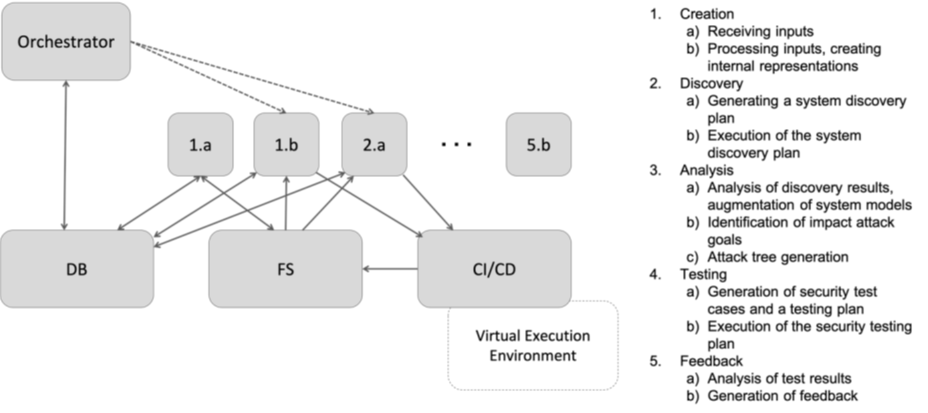
Figure 2 – Architecture of the DCT framework
Understanding Attacks Before They Happen
One of the most innovative aspects of the DCT is its ability to automatically identify potential attack scenarios.
Instead of relying exclusively on predefined attack libraries or manual threat modeling exercises, the framework performs model-based analysis to determine how adversaries could compromise the system. It evaluates the architecture, examines dependencies, and identifies potential attack paths that could lead to the violation of critical security requirements.
The outcome of this process is a collection of attack trees rooted in impactful attack goals.
Attack trees provide a structured representation of how an attacker might achieve specific objectives. They describe alternative attack paths, prerequisite conditions, dependencies between actions, and the relationships between vulnerabilities and system components. By automatically generating these trees, the DCT enables security teams to understand not only which vulnerabilities exist, but how they can be combined to achieve meaningful attacks.
This perspective is critical because cybersecurity risks rarely emerge from isolated weaknesses. Instead, they result from the interaction of multiple vulnerabilities across different layers of a system.
From Attack Trees to Automated Security Testing
Attack trees are valuable analytical tools, but the Digital Cybersecurity Twin takes the concept one step further.
Rather than stopping at theoretical analysis, the framework automatically transforms attack scenarios into executable security test cases. These tests are then deployed within the virtual environment, allowing the system to evaluate whether identified attack paths can actually be exploited.
This capability significantly reduces the effort required to design security tests manually. Instead of security engineers creating test cases from scratch, the framework generates them automatically based on its understanding of the architecture and the threats it faces.
The virtual execution environment is then launched, along with the necessary testing and observer tools. Automated vulnerability scanning, penetration testing, and observation activities are executed according to the generated test plan.
As a result, organizations gain practical evidence of system weaknesses rather than relying solely on theoretical assessments.
Understanding Impact, Not Just Vulnerabilities
One of the biggest challenges in vulnerability management is prioritization.
Large systems often contain hundreds or even thousands of potential weaknesses. Determining which issues require immediate attention can be difficult when decisions are based solely on vulnerability severity scores.
The Digital Cybersecurity Twin introduces a more meaningful approach by focusing on impact analysis.
Using model-based techniques, the framework evaluates how vulnerabilities affect critical system functions. It examines how failures propagate through architecture and identifies which attack scenarios have the greatest operational consequences.
This enables development teams to focus remediation efforts where they matter most. Rather than simply addressing vulnerabilities based on technical severity, organizations can prioritize issues based on their potential impact on business operations, safety requirements, or regulatory obligations.
This approach aligns security decisions more closely with organizational risk management objectives.
Making Security Results Actionable
Security testing is only valuable if the results can be understood and acted upon.
To address this challenge, the DCT provides detailed explanations of identified weaknesses and recommendations for remediation. Rather than producing isolated technical findings, it connects vulnerabilities to their architectural context and explains how they contribute to broader attack scenarios.
The framework also supports interactive exploration of results through AI-assisted interfaces, allowing users to investigate attack paths, understand system dependencies, and examine the reasoning behind generated recommendations.
This focus on explainability helps bridge the gap between technical security teams, system architects, and decision-makers.
Integrating Security Across the Development Lifecycle
The Digital Cybersecurity Twin is not intended to operate as a standalone tool. Instead, it forms part of a broader secure-by-design ecosystem.
Results generated by the DCT can be shared with component-level testing platforms, security validation frameworks, and compliance assessment systems. This integration ensures that security findings become part of a continuous feedback loop, informing design improvements, validation activities, and future development decisions.
By connecting security testing with architecture validation and compliance assessment, organizations can create a more comprehensive and consistent approach to cybersecurity assurance.
The Future of Security-by-Design
As IoT systems continue to grow in complexity, traditional approaches to security testing will increasingly struggle to provide adequate coverage. Organizations need mechanisms that allow them to understand risks earlier, test systems more comprehensively, and make informed security decisions before deployment.
The Digital Cybersecurity Twin represents a significant step toward this future. By combining digital modeling, automated attack generation, virtual testing environments, impact analysis, and AI-assisted explanations, it transforms security testing from a reactive exercise into a proactive engineering discipline.
Rather than discovering vulnerabilities after systems are deployed, organizations can identify weaknesses during design, evaluate their impact before implementation, and address them before they become operational risks.
In an era where cyber threats evolve faster than ever, the ability to test security before reality may become one of the most important capabilities in modern system engineering.
You can find out more about the Digital Cybersecurity Twin in the DOSS Deliverable D4.3.